
Call-out fee: $80–$180
What most Sydney plumbers charge to attend. Ask for it on the phone. Anyone who will not name it is telling you something.
A burst pipe at 2am does not wait for business hours, and neither do we. One call reaches a licensed plumber rather than an answering service, and a crew is dispatched to Tamarama with the gear to stop the problem rather than look at it.
Most of the value in an emergency call happens before anyone arrives. Knowing to shut the water off at the meter, knowing not to touch a light switch when there is a smell of gas, knowing to kill the power to a soaked area: each of those is worth more than the hour we save on the road.
So the call starts with instructions rather than a booking form. Then a crew is dispatched with the common failure points already on the van, because diagnosing from scratch at midnight is how a two-hour job becomes a two-visit one.


The coastal air slowly eats away at older metal and earthenware pipes in Tamarama’s established buildings, cracking joints and inviting blockages.
Salt air shortens the life of everything metal on the outside of a house: tap spindles, external copper, hot water casings and the fixings holding them up. It is slow and even rather than dramatic, which is exactly why it tends to be noticed all at once.
The emergency version is usually an external fitting letting go. Isolating at the meter stops it immediately, and the replacement should be specified for the environment rather than like-for-like.
Sand drains freely, which sounds like an advantage until you consider what the pipe is resting on. Fine material migrates where water moves through it, so bedding that supported a line evenly when it was laid can wash out from beneath sections of it.
That produces a gentle sag rather than a break, and a sag holds water and catches everything passing through. It is a common reason an otherwise sound line keeps needing attention.
The slowest part of an apartment emergency is often not the plumbing — it is the door. Fob access, a basement that needs a resident to open it, a car park with no after-hours entry: any of those can add half an hour while water is still running.
The dense apartment blocks share drainage runs, so one blockage needs a CCTV camera and the right access to clear without disturbing neighbours.
Two things worth doing before you ever need them: find your lot's isolation valve — usually in the laundry or a hallway cupboard — and save the building manager's after-hours number in your phone. Both take five minutes on a calm evening and both save real time on a bad one.
Tamarama is a small, steep, seaside pocket of the Eastern Suburbs (postcode 2026), the tightly-built ‘Glamarama’ between Bondi and Bronte, where cliff-top homes and dense apartment blocks tumble down to the beach. Salt air, sand and shared coastal drainage make for their own plumbing quirks, and we know the local ground.
Heavy rain arriving on a high tide is the combination that fills yards near the water. Stormwater that normally drains away has nothing to drain into, so it backs up through the pits instead — which is why a blocked line around here shows itself in the garden long before it shows itself indoors.
If your yard has filled more than once, the pit is telling you something. Clearing it during the storm is emergency work; finding out why it filled is a twenty-minute camera run on a dry day, and considerably cheaper.
Tamarama’s steep streets funnel heavy runoff toward the beach, overwhelming gully traps and stormwater pits on the older blocks.
On sloping ground the problem is rarely where the symptom is. Water leaves a failure at the highest point and surfaces at the lowest, which can be several properties away and well downhill of anything you would think to look at.
It is also why a neighbour's overflowing gully is sometimes your blocked line, and occasionally the reverse. We work uphill from the symptom rather than digging where the water appears.
Most homes around Tamarama have an overflow gully outside — a low grate, often near the back step, that nobody thinks about until it matters. It is deliberately set below the lowest fixture indoors so that when the line blocks, it spills into the garden instead of through your floor.
So a gully running in heavy rain is not a fault. It is the system doing its job and telling you the line downstream of it has stopped taking water. That is the moment to call, not after it reaches the hallway.
What most Sydney plumbers charge to attend. Ask for it on the phone. Anyone who will not name it is telling you something.
Against roughly $120–$160 in business hours. Nights, weekends and public holidays sit at the top of the range.
Call-out, the first stretch of labour and minor parts, for the common jobs: an isolated burst, a blocked toilet, a failed valve.
Slab leaks, gas line faults and anything needing walls opened at 2am climb quickly. You hear the number before we start, not after.
If it can genuinely hold, isolated, contained, water off, we will say so on the phone and book you at daylight rates instead.
These are market ranges, not our quote. You hear your number first and decide with it in front of you. Figures here are indicative of the 2026 Sydney market rather than a quote from us, you get your own number as a fixed price before any work starts.

Not a call centre. You describe what is happening, we tell you what to shut off right now, and whether this genuinely needs someone tonight. Sometimes it does not, and we say so.
The nearest available crew heads for Tamarama with the common failure points already stocked on the van: pipe, fittings, valves, drain gear.
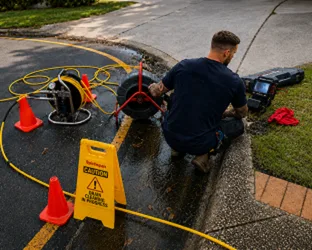
First job on site is stopping the damage: isolate, contain, make safe. Then you get a fixed price for the proper repair before it starts.

Most emergencies are permanently repaired on the spot. If a part has to wait for a supplier, you are left safe, watertight and functioning in the meantime.
Describe what it is doing and we will tell you honestly whether it needs a van now or costs less on Monday.
Cost, response times, and what actually counts as an emergency.
Ring us and a plumber picks up. Leave details instead and you will get a callback with an ETA, not a sales call.

Leave your details and our local Tamarama team will call you back fast.