First hour on site: $80–$180
Covers getting a licensed plumber to you and starting the work. Ask before booking, not after the invoice arrives.
Hot water that has given up, a mixer that drips, a toilet that runs, a leak showing on a wall, a gas appliance that needs connecting properly. All of it is licensed work, all of it is what we do, and you get the number before anyone picks up a tool.
Most people meet a plumber at the worst possible moment, which gives the trade a reputation for emergencies it only half deserves. The larger part of the work is planned and unglamorous: a hot water system reaching the end of its life, taps and mixers that have started to weep, toilets that run, a gas appliance that needs connecting properly, and the rough-in behind every bathroom and kitchen renovation.
We work across Tamarama, Bronte, Bondi, Waverley and the wider Eastern Suburbs, which matters more for the small jobs than the large ones. A tap washer is not worth a ninety minute drive to anybody, and that is exactly how suburbs get quietly neglected by operators covering the whole city from one depot.


Digging in sand is fast and then suddenly difficult. Trench walls do not hold, so a hole that would stand up unaided in clay needs shoring or battering, and reinstatement has to be compacted properly or the surface drops months later.
It is worth knowing because it affects both the quote and the timing. Anyone pricing an excavation here without asking about ground conditions has not thought about the second day.
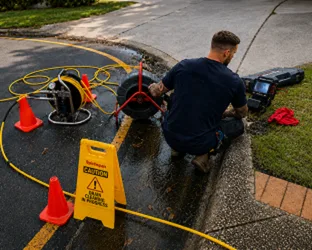
The dense apartment blocks share drainage runs, so one blockage needs a CCTV camera and the right access to clear without disturbing neighbours.
In a strata building the dividing line is usually whether the pipework serves your lot alone or more than one. A branch inside your walls feeding only your bathroom is generally yours; the stack it joins, and anything in common property, generally is not.
Getting that settled before the work starts is what stops an invoice becoming an argument. We are used to writing it up so the strata manager has what they need, and we would rather spend ten minutes on it up front than have you chasing reimbursement for a month.
The coastal air slowly eats away at older metal and earthenware pipes in Tamarama’s established buildings, cracking joints and inviting blockages.
Proximity to open water shortens the life of anything metal outside: tap spindles, external copper, hot water unit casings and the fixings holding them up. It is a slow, even process rather than a dramatic failure, which is why it tends to be noticed all at once.
Specifying for the environment costs very little at the point of installation and a great deal afterwards. Where a fitting will live outside near the water, it should be chosen for that from the start.
Water moving downhill fast is not automatically good. On a steep run the liquid can outrun what it is carrying, and the solids settle at the first flat section rather than continuing. That is why a fault on a sloping block often recurs at the same point regardless of how careful the household is.
It is a gradient problem, not a usage problem, and no amount of careful flushing fixes it. Seeing the profile of the line is what turns it into a defined repair instead of an annual visit.
Clay is not a defect. It is rigid, round and predictable, and a well laid clay line can outlast the house above it. What ages is the joints: short pipe lengths mean many of them, and the mortar or rubber ring at each one is the part that gives.
That geometry is why a clay line is usually the easiest kind to repair properly. The barrel is generally still sound, so the work is sealing joints rather than replacing pipe, and that can be done without opening the yard.
A tank or heat pump mounted on an exposed elevation near the water works harder for its life than the same unit two streets inland. Casings corrode, anodes go faster, and the sacrificial parts that protect a tank need checking sooner than the manual suggests.
The cheap intervention is the anode. Checked at the right interval it can add years to a tank; ignored, it is the reason a unit that should have lasted a decade needs replacing at seven.
Covers getting a licensed plumber to you and starting the work. Ask before booking, not after the invoice arrives.
Business hours across Sydney in 2026. Out-of-hours work costs more for the obvious reason and should be disclosed up front.
One fixture, one visit, minor parts included. Taps, toilets, valves and the flexible hoses that quietly fail.
Elements, thermostats, tempering valves and anodes. Worth doing on a tank with years left, not worth doing on one that is corroded through.
Renovation rough-in, gas work and excavation get a written number before a tool comes out, not an estimate that drifts.
Figures reflect the 2026 Sydney market rather than a quote. You get your own number, in writing, first. Figures here are indicative of the 2026 Sydney market rather than a quote from us, you get your own number as a fixed price before any work starts.
A plumber takes the call, not a message service. Describing the symptom is usually enough for us to tell you what it probably is, what it will likely cost, and whether it genuinely needs someone today.
The crew nearest Tamarama takes the job, with the common failure points already stocked on the van so most work finishes in the one visit.
We look at it properly, show you what has actually failed, and put a fixed number in front of you. Nothing starts until you have agreed to it.

The job is completed, tested and cleaned up, and you get the compliance paperwork where the work calls for it.
Describe it and we will tell you whether it is a plumber, a gasfitter or neither, and whether it is worth doing today or booking for the week.
Straight answers on licences, cost, urgency and what happens on the day.

Phone is quickest. The form works just as well, and it reaches the crew covering Tamarama rather than a national call centre.

Leave your details and our local Tamarama team will call you back fast.